Meta Description: How to Lower Your Auto Insurance Premiums 2026 with our 30-step guide. Learn expert strategies to reduce your costs and secure the best coverage for your vehicle today.
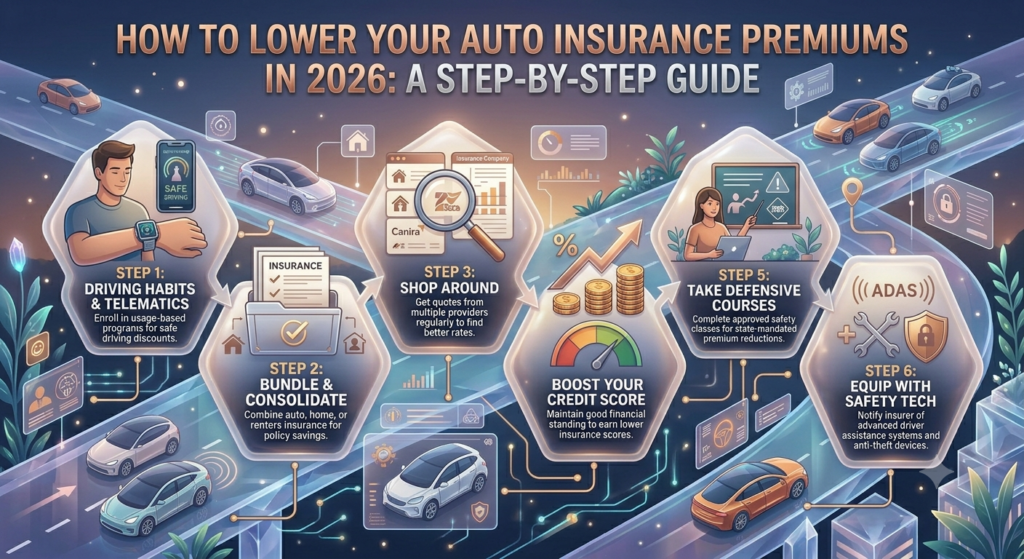
1. Understanding the Auto Insurance Landscape in 2026
Finding the most effective ways how to lower your auto insurance premiums 2026 is a priority for every budget-conscious driver. As the automotive market shifts, understanding these 30 essential steps will help you regain control over your monthly expenses. Unlike previous years where static risk assessment was the norm, modern insurance carriers are utilizing dynamic modeling. To lower your costs, you must recognize that your “risk profile” is now a living data set. Insurers evaluate your connectivity metrics and driving behavior. For industry-wide regulations, consult the National Association of Insurance Commissioners (NAIC).
2. The Relationship Between Your Credit Score and Premiums
A high credit score is your most powerful financial tool in 2026 for lowering auto insurance premiums. Actuarial studies show a clear correlation between financial management and claims frequency. Insurers perceive individuals with high credit scores as responsible and less likely to file small claims.
3. Comparing Quotes: The Power of Market Research
Loyalty to an insurance carrier is often a financial trap. In 2026, the competitive landscape requires you to shop around every six months. Using independent resources like Consumer Reports allows you to compare not just price, but reliability.
4. Bundling Policies: A Strategy for Savings
Consolidating your insurance needs—such as auto, home, and umbrella liability—under a single provider is a cornerstone of modern financial planning. This multi-policy strategy often triggers significant discounts and simplifies your financial management.
5. Raising Your Deductible: Weighing the Risks
Adjusting your deductible is a direct way to influence your premium costs. By raising your deductible from $500 to $1,000, you demonstrate that you are willing to take on more financial risk for minor accidents, leading to immediate premium reductions.
6. The Impact of Defensive Driving Courses
Many states and carriers offer premium discounts for completing certified defensive driving courses. These courses serve as evidence that you are a low-risk driver committed to road safety, especially beneficial for those looking to improve their insurance status.
7. Telematics and Usage-Based Insurance (UBI)
In 2026, telematics represent the future of insurance. Enrolling in UBI programs allows insurers to monitor your actual driving habits—like braking and acceleration. If you are a safe driver, this data-driven approach can save you up to 30% annually.
8. Maintaining a Continuous Coverage History
Insurance companies heavily penalize coverage lapses. Even if you don’t own a car, maintaining non-owner liability coverage keeps your insurance history “continuous,” preventing you from being categorized as a “high-risk” driver.
9. Evaluating Your Vehicle’s Safety Features
Modern vehicles are equipped with Advanced Driver Assistance Systems (ADAS). If your car has lane-keep assist or automatic emergency braking, ensure your insurer knows. These features demonstrably reduce accident frequency and often qualify for specific discounts.
10. The Importance of Reviewing Annual Mileage
Your annual mileage estimate is a primary variable in your premium calculation. If your commute has changed due to remote work, updating your annual mileage estimate with your insurer can lead to an immediate rate adjustment.
11. Geographic Factors: Moving and Premiums
Your physical location is a major factor in how insurers assess risk. Theft rates and local repair costs vary significantly by zip code. Research the insurance implications of a new location before finalizing your move.
12. Removing Unnecessary Coverage for Older Cars
For older vehicles with low market value, continuing to pay for full coverage is often a poor financial decision. Compare your total premiums against your vehicle’s actual cash value to decide if it is safer to switch to liability-only.
13. Negotiating with Your Current Provider
When negotiating, always lead the conversation by asking specifically how to lower your auto insurance premiums 2026 using loyalty credits. Sometimes, simply showing that you have researched cheaper competitors is enough to secure a better rate.
14. Loyalty Discounts: Reality vs. Myth
While some insurers offer “tenure” discounts, do not let “loyalty” keep you in an overpriced policy. Always verify if your loyalty discount actually beats the market price of a new policy elsewhere.
15. The Role of Professional Associations and Groups
Many insurers provide group discounts for members of professional associations or alumni groups. Check if any of your professional affiliations offer these benefits to unlock savings not available to the general public.
16. Paying Annual Premiums vs. Monthly Installments
Paying your annual premium in a lump sum avoids service fees often added to monthly payments. Many insurers provide an “in-full” discount, ensuring your total annual cost is lower.
17. Managing Your Motor Vehicle Report (MVR)
Your MVR is the record of your driving history. Periodically order your own MVR to ensure there are no errors, such as old violations that should have expired, which could be artificially inflating your premiums.
18. Avoid Filing Small Claims
Filing a claim for minor damage often leads to premium surcharges that persist for years. It is often more economical in the long run to pay for small repairs out of pocket.
19. Understanding the “High-Risk” Label
If you have been labeled “high-risk” due to past accidents, focus on long-term rehabilitation. Maintain a spotless record for several years and periodically request that your insurer review your file to remove the classification.
20. The Influence of Gender and Age Factors
Insurance rates change significantly at age milestones, such as 25, 50, and 65. Additionally, marriage often lowers premiums as it is viewed as a sign of stability. Inform your insurer of life events that may change your demographic.
21. How Inflation Drives Insurance Trends in 2026
Inflation impacts repair costs, which drives up insurance premiums industry-wide. Follow updates from the NAIC to understand how the broader economic climate is affecting insurance pricing.
22. Digital Policy Management and Paperless Discounts
Opting for paperless billing and automated payments often yields small but cumulative discounts. These digital management tools also prevent accidental missed payments, which could otherwise lead to penalty fees.
23. Avoiding Add-ons You Don’t Need
Review your policy declarations page to identify unnecessary add-ons like rental reimbursement if you already have alternative coverage. Stripping away these services can lower your premium immediately.
24. Monitoring Your Credit Report for Errors
Errors on your credit report can negatively affect your insurance score. Regularly verifying your credit file ensures you are not paying more due to a clerical mistake.
25. The Benefit of Using Independent Insurance Agents
Independent brokers represent multiple carriers and can perform a comprehensive market search on your behalf to find the best value policy for your specific driving profile.
26. Preparing for Life Changes (Marriage, Retirement)
Major life transitions are the perfect time to audit your insurance policy. Proactively communicating these changes ensures your premiums are always optimized for your current life situation.
27. Analyzing State-Specific Requirements
Every state has unique insurance laws. Understanding these minimums allows you to carry enough protection to satisfy the law without being over-insured for your specific assets.
28. The Long-Term Financial Impact of Traffic Violations
Traffic violations can impact your rates for years. Know exactly when violations will expire from your record so you can demand a rate review as soon as you are eligible for lower premiums.
29. Future-Proofing Your Insurance Strategy
Review your financial health and insurance coverage annually. By keeping your records clean and monitoring market rates, you ensure that you are always paying the minimum possible premium.
30. Conclusion: Your Roadmap to Financial Freedom
By consistently applying these methods on how to lower your auto insurance premiums 2026, you ensure long-term financial savings. Reducing your auto insurance premiums is a proactive, ongoing process that requires annual attention and data-backed decision-making.