Being classified as a “high-risk driver” can feel like a daunting hurdle, often resulting in higher insurance premiums. However, with the right strategy in 2026, you can navigate these challenges and work toward better rates and greater financial security on the road.
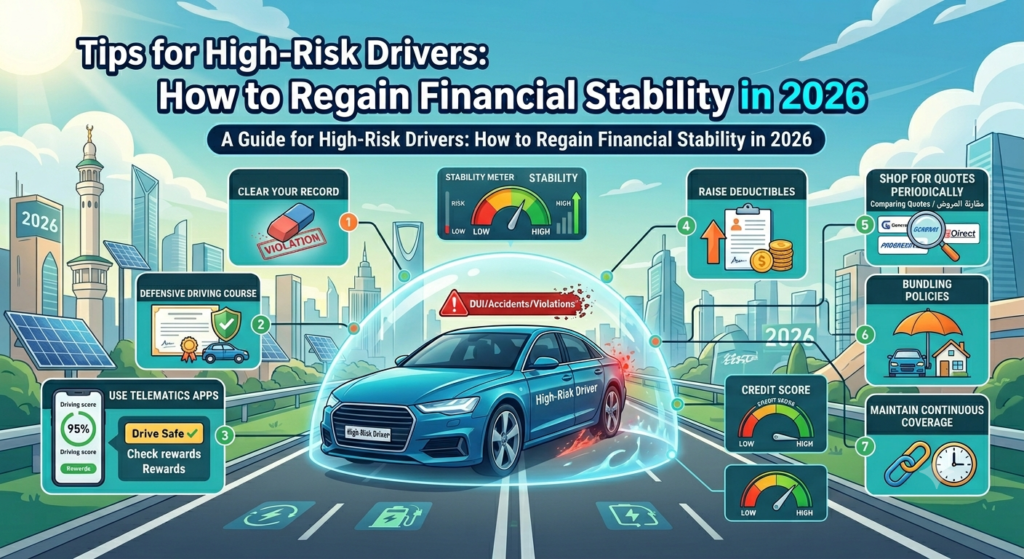
1. Understanding the “High-Risk” Label
Insurance companies categorize drivers based on risk profiles. Factors like multiple accidents, traffic violations, or a DUI often place you in this category, leading to higher costs.
2. The Path to Better Insurance Rates
While your current premiums may be high, they are not permanent. By demonstrating responsible driving habits over time, you can effectively move out of the high-risk bracket.
3. Top Strategies for High-Risk Drivers (2026)
Success requires a proactive approach. Focus on clearing your record, choosing the right coverage, and utilizing specialized insurance providers designed for high-risk profiles.
4. Comparison Table: Specialized Carriers
| Provider | Focus Area | Average Benefit |
| Progressive | Flexible Plans | High-risk forgiveness |
| General | Non-standard | Immediate coverage |
| National General | Complex History | Claims support |
| Direct Auto | High-Risk Profiles | Installment plans |
5. Why Defensive Driving Courses Pay Off
Most insurers offer significant discounts for completing a state-approved defensive driving course. It serves as proof of your commitment to change and safety.
6. The Power of Telematics Apps
Even as a high-risk driver, using a telematics device can help. It allows you to prove to the insurer that you are driving safely daily, which can lead to early premium reductions.
7. Raising Your Deductible Strategically
If your premium is high, choosing a higher deductible can lower your monthly payments. Only do this if you have an emergency fund set aside to cover the cost in case of an incident.
8. Checking Your Motor Vehicle Report (MVR)
Mistakes happen. Periodically check your MVR to ensure there are no clerical errors. If there are, dispute them immediately to correct your profile.
9. Working with Independent Insurance Brokers
Independent brokers have access to multiple non-standard insurance carriers. They can shop the market for you, finding options that aren’t visible on major comparison sites.
10. The Importance of Continuous Coverage
Never let your policy lapse. Even if you are high-risk, a gap in coverage is viewed very negatively by insurers and will make finding a new policy much harder and more expensive.
11. Focusing on “Forgiveness” Policies
Look for insurers that offer “accident forgiveness” or “violation forgiveness” programs. These programs can prevent a single mistake from causing a massive spike in your rates.
12. Bundling Policies for Stability
Just like standard drivers, high-risk drivers can benefit from bundling home or renters insurance with their auto policy to get multi-policy discounts.
13. Researching Legal Rights
For information on your rights as a consumer in the insurance market, consult resources from the National Association of Insurance Commissioners (NAIC).
14. Setting Realistic Financial Goals
Acknowledge that your rates may be high for a season. Create a budget that accommodates these costs while you work on improving your driving history.
15. The Impact of Vehicle Choice
If you are currently high-risk, avoid driving high-performance or luxury vehicles. Opt for safer, more affordable cars to keep insurance costs manageable.
16. Using Professional Claim Assistance
When an accident occurs, having professional representation can help you navigate the claims process, ensuring you don’t face unnecessary penalties. Consult resources like AAA for roadside and claim support.
17. Monitoring Credit Scores
Since credit scores are often linked to insurance premiums, improving your credit can have a secondary benefit of lowering your overall financial risk.
18. Patience is Key
Moving out of the high-risk category is a marathon, not a sprint. Consistency in safe driving over several years is the only guaranteed way to lower rates permanently.
19. Staying Informed on Regulations
Regulations change frequently. Stay updated on local traffic laws and insurance requirements to ensure you remain compliant and avoid further points on your license.
20. Conclusion: Your Future on the Road
Being a high-risk driver today does not define your future. By following these 2026 strategies, you are taking control of your financial health and working steadily toward becoming a preferred driver once again.